To operate effectively in the field of modern hardware, one must first master the baseline hardware architectures. Mechanical keyboard switches are not a monolith; they are precision-engineered micro-mechanisms designed to complete an electrical circuit while providing specific physical and acoustic feedback to the operator. We classify these mechanisms into three primary operational vectors: Linear, Tactile, and Clicky.
Vector Alpha: The Linear Mechanism
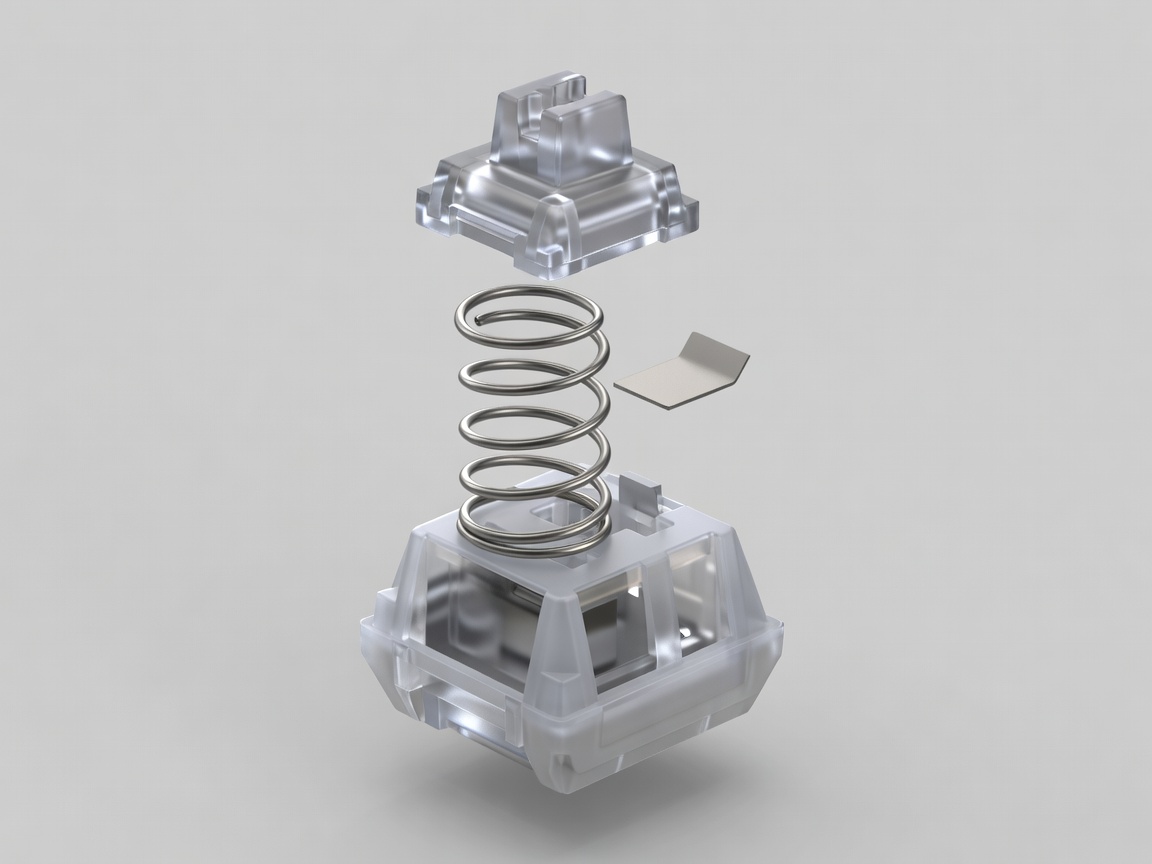
Linear switches execute the simplest, most direct mechanical path. When the operator applies downward force to the stem, it travels straight down until it hits the bottom housing (the "bottom out"). There is no physical interruption, no bump, and no audible click during the travel. The only resistance provided is the upward tension of the coiled metal spring.
Operational Profile: Smooth, consistent, rapid. Ideal for high-speed repeated inputs (gaming/rapid data entry). Because they lack a physical bump, operators must rely entirely on muscle memory to know when the electrical contact leaf has been actuated (typically around 2.0mm into a 4.0mm total travel distance). Prominent field assets in this category include the Cherry MX Red, Gateron Black Ink, and NovelKeys Cream.
Vector Bravo: The Tactile Mechanism
Tactile switches are engineered to provide physical confirmation of actuation before the stem hits the bottom of the housing. This is achieved through specific geometric molding on the legs of the plastic stem. As the stem moves downward, these protruding legs slide against the copper contact leaf. The leaf is pushed outward, and then snaps back inward as the legs pass, creating a distinct physical "bump" felt through the operator's fingertips.
Operational Profile: Measured, confirmed, deliberate. Designed for typing accuracy, allowing the operator to stop pressing immediately after feeling the bump, thus avoiding harsh bottom-outs. The tactility profile can range from a minute, sharp bump (like the Cherry MX Brown) to a massive, rounded resistance that spans the entire keystroke (like the Holy Panda or Zealios V2). Tactiles are the standard issue for prolonged intelligence gathering and drafting.
Vector Charlie: The Clicky Mechanism
Clicky switches take the physical bump of the tactile vector and add a deliberate acoustic element. Historically, this was achieved using a "click jacket"—a two-part stem where a plastic sleeve slides down and violently impacts the bottom housing upon actuation (e.g., Cherry MX Blue). Modern iterations, pioneered by Kaihua (Kailh), utilize a "click bar"—a thick horizontal metal wire that is snapped by the stem on both the downstroke and the upstroke.
Operational Profile: Loud, undeniable, authoritative. Clicky switches provide both a sharp tactile bump and a high-frequency audible click. While providing ultimate confirmation of input, their acoustic footprint makes them unsuitable for shared operational environments or stealth deployments. They remain popular for operators who require the sensory feedback of traditional typewriters.
Summary Directive
Selection of the baseline architecture dictates the entirety of the hardware interface experience. A linear mechanism offers speed, a tactile mechanism offers precision confirmation, and a clicky mechanism offers maximum sensory feedback. Proceed to Briefing Two for material analysis.