Understanding the basic architecture is insufficient for advanced operations. The true character of a mechanical switch—its acoustic signature and coefficient of friction—is dictated entirely by the polymer blends used in its construction and the chemical treatments applied post-manufacturing. This briefing details the materials and modification protocols required for optimized hardware.
Primary Polymer Blends
Manufacturers utilize specific plastics to achieve desired outcomes in sound and feel. The housing (top and bottom) and the stem are often composed of different materials to prevent binding and control the acoustic pitch of the bottom-out.
- Polyoxymethylene (POM): Highly durable, self-lubricating thermoplastic. Used extensively for switch stems (e.g., standard Cherry stems, NovelKeys Creams). It provides a smooth travel with a distinct, slightly deep acoustic profile.
- Polycarbonate (PC): Transparent and rigid. Commonly used for top housings to allow LED light bleed for illuminated operational environments. It produces a higher-pitched, thinner sound profile compared to softer plastics.
- Nylon (Polyamide): Softer and more porous than PC. Frequently used in bottom housings. Nylon yields a deeper, more muted, "thocky" acoustic signature that absorbs high-frequency vibrations during bottom-out.
- UHMWPE (Ultra-High-Molecular-Weight Polyethylene): An advanced, hyper-smooth plastic with an incredibly low friction coefficient. Used in boutique stems and housings to create an almost frictionless, gliding sensation, though it is softer and more prone to deformation.
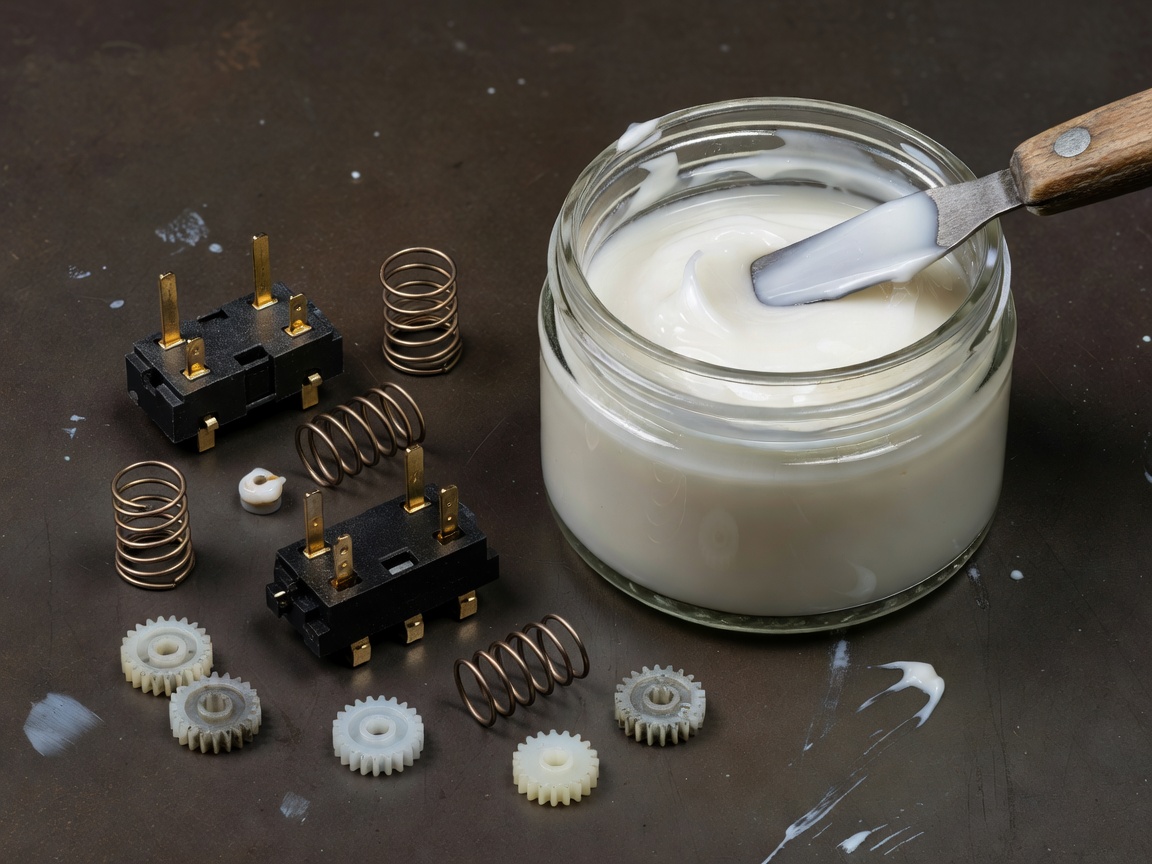
Chemical Enhancement: The Lubrication Protocol
Stock switches directly from the factory exhibit microscopic imperfections in the plastic molding. When the stem slides against the housing rails, these imperfections create friction, resulting in a scratchy sensation and a high-frequency acoustic hiss. The tactical response is aftermarket lubrication.
Lubrication involves disassembling the switch and applying a micro-layer of specialized grease or oil to the contact points (housing rails, stem sides, and spring ends). This procedure must be executed with precision; over-lubrication will render the switch sluggish and unresponsive.
| Compound | Viscosity | Target Application |
|---|---|---|
| Krytox 205g0 | Thick Grease | Linear switches, heavy tactile stems. Maximum smoothness, deepens sound. |
| Tribosys 3203 | Thin Grease | Tactile switches. Retains tactile bump sharpness while reducing scratch. |
| Krytox 105 | Oil | Springs. Applied via bag-lubing to eliminate metallic spring ping. |
Film Modification
Beyond lubrication, operators frequently deploy switch films. These are ultra-thin (0.125mm to 0.150mm) gaskets made of polycarbonate, TX plastic, or deskeys foam, placed between the top and bottom housings before reassembly. The objective is to eliminate "housing wobble"—the minute physical play between the two halves. A tighter housing drastically deepens the acoustic resonance and stabilizes the stem during actuation.